Friday, April 28, 2017

Falling Upward: Trusting God Into the Second Half of Life


The moment remains vivid in my mind’s eye.  My wife, Susan, and I are sitting in a youth minister friend’s living room on a gorgeous spring day.  The windows are open wide, and sunshine is streaming in through the gauzy curtains that wafted in the breeze.  Three of my youth ministry comrades and I, along with our wives, were engrossed in rich conversation with “Big Don” Williams… a mentor, friend and a member of the first generation of youth ministers within Churches of Christ.

My friends, our wives and I were all in our early twenties in that moment.  And as “Big Don” painted a picture of the possibilities for reaching a generation of students for Jesus, my heart pounded… this is why I had chosen to become a minister with a local church.  I had responded to the challenge of “If you feel you can do anything other than ministry with a local church, you should do it because ministry is hard” with a deeply felt sense of calling to serve a local church as a minister.  That has changed, though.

None of that group of friends I sat with that fine spring day remain in a traditional ministry role with a local church. Nor do I.  And “Big Don” Williams died several years ago. Things changed.

I want to make clear that I am more committed to the possibilities of Jesus’ church than I have ever been.  I deeply love God, Jesus, and the Spirit.  I am enjoying ministry and feel a passion for ministry that I haven’t felt in years.  I’m just not serving as a minister on the staff of a local church.

What changed? Did I get old, crotchety, jaded and cynical?  Did I attend one too many elders’ meeting?  I don’t think so… or at least I hope not (as far as old, crotchety, jaded and cynical). 

What changed for me is that I grew weary of “doing the ministry of doing church.”  Over a span of thirty plus years, that twenty-something version of me learned how to “do church.” And what “doing church” appeared more-and-more to be was less-and-less of what I had felt called to do all those years ago.  For me, the work of a minister had become “don’t rock the boat, don’t disturb the status-quo, keep the church folk happy.”  And the more I pushed against this reality, the more frustrated I became… and the more frustrating I became to many of the elders I worked for.

Therefore, while I no longer serve a local church as a minister… I am experiencing vibrancy in ministry that I haven’t felt in years. I’m re-thinking what it means to be the church.  I’ve grown increasingly uncomfortable with the “building-centric” model of church that I supported for over three decades of my ministerial life. I’m seeing church much more as a living, breathing expression of Jesus in our communities and our world, and much less of a place where Christians go once or twice a week to “do church.” 

However, there’s not any sense on my part that I wasted over thirty years of my life serving local churches as a minister.  All of my experiences, good and bad, were formative and have prepared me for my current season of ministry. And my brothers and sisters in Jesus, the people I did ministry alongside (and most of whom have day jobs as electrical engineers, firefighters, teachers, architects, and plumbers), have taught me what Christ-like love, grace, and the Gospel looks like. I’m continuing to learn we are most like Jesus when we care for the lost, the last, and the least. There are no regrets, no “I wish I could do things over differently,” but a deeply held conviction that God is using all of my first-half of life experiences in preparing me for this second-half of my life and a new expression of ministry.

That new expression of ministry for me has taken the form of serving as the executive director of a start-up non-profit called Rwanda Children (www.rwandachildren.org). Rwanda Children’s mission is to provide housing, food, family and hope to at-risk kids in Rwanda. I’ve held malnourished children in my arms, I’ve had to turn away children that parents pleaded with me to take, I’ve wept at genocide memorials and heard first-person accounts of the atrocities of the Rwandan genocide that killed over one million people, while witnessing God’s power in bringing reconciliation, redemption and hope to a left-for-dead people and country. It is hard. It has stretched me. It frustrates me due to my on-going struggle to control things that I can’t control. I love this ministry.  It has refreshed my minister’s heart and spirit.  I praise God for His faithfulness.

Additionally, I am in the midst of exciting conversations about what new expressions of church and mission might look like in local communities.  Friends in Nashville have begun two missional coffeehouses, and have planted non-traditional churches in those coffeehouses.  Several of us in the city where I currently live are in discussion with the folks in Nashville about the possibility of our implementing their model in our city.  These conversations are exciting

What’s ahead of me ministry-wise? I don’t really know. I’m optimistic about the future of the church and for God’s expression of ministry through a priesthood of all believers. These God-possibilities wash over me like a fresh breeze and warming sunshine on a gorgeous spring day.

Sunday, February 24, 2013

Bar Church


As adolescents we were warned to keep a safe distance from the lures of the world: alcohol, drugs, and sex. Given our developmental fragility, it wasn't bad advice. Logically, then, we were most likely to succeed if we also separated ourselves from those who didn't keep a safe distance from alcohol, drugs, and sex. This safe distance, however, made the actual practice of loving anyone whose behavior didn't mirror ours more than a little unwieldy.

As we moved into adulthood we understood clearly that loving God and loving people were our cardinal directives. Unfortunately, we simply had no idea how to engage with the people we'd always been warned to avoid.

The Gospel examples of Jesus looked very different from anything I'd ever seen practiced by the religious. Instead of backing away cautiously, the way I'd learned to do, Jesus moved toward those who'd been identified as disreputable sinners. Not only did Jesus not treat them as being worth less than the righteous, the way I'd been groomed to do, he actually went to a lot of trouble to insist that these sinners were worth so much that his Father spared no expense in His dogged pursuit of them. Jesus' unexpected behavior both surprised his closest friends and outraged the religious.

Mirroring Jesus' own unbridled affection for sinners means for you and me living out the confounding reality of a God who, ignoring self-interest, takes on flesh to be with sinners, for sinners.

The Southern Hills church is launching Bar Church on March 23. It's just what the name suggests... a church that meets in a bar. The mission of Bar Church is to take the Gospel of Jesus to people who are unwilling, as a result of feelings of unworthiness or prior negative experiences with a church, to participate in a traditional church gathering within a traditional church setting. We want to go outside the walls of a church building in order to seek out and share the Gospel of Jesus with the unchurched by meeting them in a setting where they would gather and consider non-threatening.

Pray for Bar Church.

Tuesday, June 28, 2011

Busyness...

Question: So, how are things going?

Answer: Busy.


This is the new common question and answer from me, from friends, from colleagues, from everyone. The common response in the past is to be fine, but now everything is busy. At some point, there was a transitional response that happened from fine to busy. There has been a cultural shift that defined busy was a better term than fine. I think it is a shift in translation that happened in the last three years, since the economy has been hindered. Busy showed that we had work, which too often was a positive answer. But, it needs to end at some point in dialogue with trusted individuals. I say it too much. The truth is that I really am busy most of the time. It can be good, but in many ways I am realizing it also is not.


I am learning that busyness may be my great deterrent to true community. I am busy and many of my friends know that I am busy. What this communicates to my friends is that I don’t have time for them. Friends begin to think that if I am busy, I don’t need them. When you are busy or fine, it is a common answer that says I don’t need you right now. Being busy is a common answer for: "Stay out of my life... I don’t have time for you."


When I am busy, I choose to not engage in community. It is a verbal and chosen time response to friendship. When I am busy, I am actively not inviting others into my life. But, in my head I think that busy is good. In all reality, being busy is selfish.


I know there are times that people really are busy and need to focus on the task at hand to address a given problem. But if we are too busy to engage in relationships, we have a problem. When we respond and tell you we are too busy, too often, we need help. We really need deep relationship, comforting and concern. The result of being extra busy is loneliness and depression. You may not relate with this, but I truly need freedom from being busy. Time is of the essence. If you are not busy, you are setting an example for the rest of us. Please take time to engage people that are too busy. We need you.

Friday, April 15, 2011

Be The Church...

“We Are The Sermon” Day, or WATS Day, will take place at SoHills this Sunday, April 17. For the seventh straight year, WATS Day will be an opportunity for Christians across the city of Abilene to honor God by providing works-of-service to people in our community living in difficult situations.

WATS Day = the church is leaving the building.


Wednesday, April 13, 2011

Change...

I don't know if it's that I like change so much as that I dislike doing the same thing when it's not working.

Wednesday, February 16, 2011

Leadership Basics...


1) Be responsible. If you say you are going to take care of it, then take care of it.

2) Be professional. Arrive on time. Actually be early. And be organized.

3) Be the best. Get better every day at what you do.

4) Be humble. Talk less. Listen more.

5) Be proactive. Not reactive. Respond and initiate before being told to, or asked to, by your supervisor or peers.

Friday, February 4, 2011

Sustaining Leadership...

This insightful quote from Israel Galindo's book Perspectives On Congregational Leadership has deep implications for all of us who desire to be Christ-like leaders:

Here is the heart of what it takes to sustain leadership. We move from the impossible--controlling others--to the merely difficult--managing ourselves.

We can in fact manage ourselves, if we choose to. We cannot control others. But we can offer our point of view, challenge them, and give them room to respond.

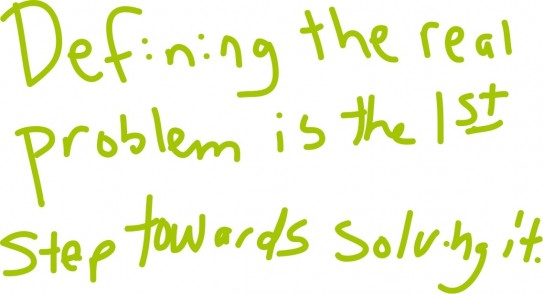
Defining The Real Problem...

I got an iPad recently. And one of the iPad apps I've already found to be quiet useful as a personal brainstorming tool is Whiteboard. I find myself using Whiteboad to think in pictures, and to scribble out a quick thought. Like the following:

Could we be addressing issues, symptoms, reactions… attempting to correct a problem… but the real problem continues to be unaddressed?

Friday, January 21, 2011

Hey Jude Flowchart...


While listening recently to the Beatles' classic "Hey Jude" on my iPod, I came across this interesting flow chart. Try it out yourself. Cue up "Hey Jude" and stare at the flow chart. Caution: don't get stuck in an infinite loop of "na na na na na na na na na..."

Tuesday, January 18, 2011

12 Characteristics of A Godly Leader...


1. Be humble.

2. Be authentic.


3. Be generous.


4. Be Christ-like.


5. Be the best at what you do.


6. Be consistent.


7. Be courageous, willing to go first and take risks.


8. Be honest and trustworthy.


9. Be thankful.


10. Be a learner.


11. Be adaptable and open to change.


12. Be an encourager.

Wednesday, January 5, 2011

11 Words For 2011...

Need some inspiration for 2011? Check out these 11 words.


Are you inspired?

Saturday, December 25, 2010

Nativity 2.0...

This interesting video reveals what the birth of Jesus might have looked like if it happened in 2010.


Clever... and makes you think.

Tuesday, November 2, 2010

Emotional Endurance...

I'm becoming more convinced that one of the keys to effective leadership is what I would call emotional endurance. If you're going to make it as a leader, you have to have a high threshold for a wide variety of emotions.

Every once in a while, fellow ministers will ask me about the greatest challenge I face in church-world. Frankly, I think it's managing your emotions. You have to manage the fear and the discouragement and the anxiety. If you can't, you won't make it. But if you allow the challenging situations to build emotional endurance, you'll be prepared for even bigger challenges.


One of the things that has helped me deal with criticism and stress is my perspective. I don't particularly like criticism or stress, but I see it as building emotional endurance. And if I'm going to do bigger and better things for God, then I'm going to need more emotional endurance.


What I'm getting at is this: God wants to work in and through our emotions. He wants to build emotional endurance. And that often involves high levels of stress, or criticism, or fear, or discouragement. But if we open ourselves up to God growing us through these circumstances, then we'll become a stronger person emotionally.


One of my most challenging leadership memories is rooted in a ropes' course element described by various names: Pamper Pole, Eagle's Nest, Leap of Faith. Whatever you call it, the essence of this element is: slip on a safety harness, limb to the top of a 30' telephone pole, leap from the pole to a nearby trapeze bar. Sounds simple, right?! It's a good thing I'm 30 feet in the air because I'm usually shaking so bad prior to leaping that my knocking knees are making quite a racket. But I look back at these kind of situations that were clearly outside my comfort zone and they built emotional endurance. I was able to step into a high pressure situation with a little more confidence the next time around.


May God give us thick skin and a soft heart.

Monday, October 25, 2010

Be Good At Something Different...

In ministry, most churches and leaders try to be good at what everyone else is good at doing. We’re trying to improve our preaching, youth groups, children’s curriculum, worship, campus ministry, etc.

The problem is that we’re not blessed with the same gifts or called to the same types of ministries. Why not give ourselves permission to be good at something that few other churches and leaders are striving to do?


Maybe we can be phenomenal at doing a sports ministry with immigrant kids in local apartment complexes, sponsoring parties for mentally challenged people in your community, or impacting the world through mentoring the next generation of Kingdom leaders. Maybe we’re called to serving our community with radical generosity, doing evangelism through Facebook, or leveraging your wealthy suburban church to support the planting of a church in another city's inner city.


Rather than being good at the usual ministries... what if we attempted to be good at something we’re uniquely positioned to do. Be good at something different!


What is something different you (or your ministry) can do?

Monday, October 18, 2010

Convicted Civility...

"One of the real problems in modern life is that the people who are good at being civil often lack strong convictions, and people who have strong convictions often lack civility." - Martin Marty

We need both a civil outlook and a "passionate intensity" about our convictions... thus, a "convicted civility."

Monday, October 11, 2010

To Scoot Or Not To Scoot...

This recent post by Jon Acuff made me laugh. No one casts a more entertaining and knowledgeable eye on church-world than Jon. And as someone who has stood at the microphone and asked people to "Please scoot to the middle," I'm intrigued with the whole scoot or no scoot conversation.

There are two types of people in the world: those who will sit in a seat that’s not theirs at an event and those who won't.


I am in the "won't" category. If I have tickets for the nosebleed section at a concert, that's where I sit. I can't sneak down front and sit in better seats without constantly thinking the rightful owner of that seat is about to show up at any moment. And he's probably an Ultimate Fighter with his concealed weapon permit.


Plus, when you get caught you have to pretend you didn't know you're $10 tickets didn't permit you to sit on the front row. "Wait a second, this is row #1? Let me look at my ticket. Oh, would you look at that! I'm in row #1,000. Simple mistake on my part. Whoops!"


I can't do it. I can't be that guy, which is why I like the seating arrangement at most churches. No one has a ticket. Each Sunday morning is a seat free for all. And it all comes to a head when one of the ministers or elders says one thing:


"Please scoot to the middle so people who just got here can squeeze in."


But every time I hear that phrase three things go through my head:


1. The scoot rewards bad behavior.


I got here early. I've got the end of the aisle on lockdown. If I scoot, people who come late are going to be rewarded for their late behavior. Like a hamster receiving a delicious nut when it presses a lever, they'll associate lateness with primo end of aisle seating. That's perpetuating bad behavior.


2. Can we all vote on a better word than "scoot"?


"Scoot" sounds like a cartoon, make-em up word from Ponyville, the home of My Little Pony. That's a word I want Papa Smurf saying, not one of my church's leaders. I say we change scoot, to "slide." That sounds cool and almost like a hip hop move or a wedding dance that your crazy Aunt always does at the reception.


3. Is this a Boundaries moment?


In their book, "Boundaries," Cloud and Townsend detail healthy boundaries we all need to draw in our lives when it comes to personal relationships and the way we let people treat us. Is there anyway that when someone comes to my aisle and tries to get me to slide, I can just say, "Sorry dude, boundaries?"


4. This is the only place on the planet where the scoot works.


Try to get someone to scoot at a high school football game. Or in a Starbucks. With your coffee and a smile, just walk up to a hip couch and say to a stranger, "Will you please scoot to the middle?" That probably won't be awkward.


5. Can I rescoot if no one comes?


If I do scoot and no one comes, can I rescoot or descoot and claim my previously surrender seat territory? Does that make someone I scooted next to in the middle feel smelly? It's not that they're smelly, they might be wearing Coolwater cologne for all I know, but I like I little space between me and the next guy, a "Baptist buffer" if you will. Can I rescoot?


Fortunately, you are not like me. You will not think these things in church. You do not spend moments of your life thinking about the consequences of "scooting." I'm proud of you, I really am.


But be honest, do you scoot when called upon to scoot?

Monday, October 4, 2010

How Should A Christian Respond To Bad Customer Service...

Ron Edmondson got me thinking about a Christian's example in the marketplace with this recent post. Should Christ-followers complain about bad customer service, or accept whatever kind of service we receive with a smile?

As a former business owner, I am a huge proponent for treating a customer well. I don’t know that I would say the customer is always right, but the goal should certainly be that they leave feeling good about their experience. Customer service is the front door of any business (or church). Because of that, I tip well, I express appreciation and I always have a desire to make the waiter or waitresses day better, not worse than before I came. I want to encourage and reward good service and I realize that there could always be personal reasons why a person gives bad service on a particular day. I am always perplexed, however, as to the way to respond when I receive bad service.


One night this week, my small group ate together at a local restaurant. From our first encounter, we knew our waiter did not want to be there. He was obviously impatient and snappy with his responses. It wasn’t the worst customer service I’ve ever received, but it was obviously not one of the best. When a large group recognizes the tension in a waiter, it’s probably a good indicator that service is less than excellent. It reminded me, especially with the pressure of my small group around me, that I don’t always know how to respond.


What kind of customer should a Christian be?

Do Christians have a right to complain when their service is bad?


If the waiter or waitress is rude, do we turn the other cheek, or speak the truth in love? Do you tip for bad service and for good? Do you talk to the manager?


How do you respond to bad service... whether it be a restaurant server, your dentist, a customer service representative at a local store, or the person on the other end of the line when you dial a company's customer service department?

Monday, September 27, 2010

No One Cares About Your Church...

Tim Schraeder shared the following thoughts recently. I can't say that I agree with everything Tim writes, or that I would have said this exactly the way he did. But Tim made me think. And I'm thinking it's a good thing when people make us think about what it means to be church.

I'm sorry to say it so harshly but it's true... no one cares about your church.


Look at recent polls, church attendance, or even watch the news and it's fairly obvious... people don't care about the church or what we have to say anymore. We've lost credibility for some legitimate reasons. And don't chalk me up to being a church-basher, I passionately care about the church, I'm just saying what's true and what some of us might not want to admit.


The church has moved from the center of our Western culture and while some fight to keep it in the public square others of us are realizing the greatest way we can impact culture is by being on the periphery.


Christianity at its core has always been about counter-cultural, so why in the world do we try to be perceived as being relevant by looking just like the culture around us?


We've cheapened the Gospel by trying to be accepted at a great cost. The emerging generation can see right through the charade. We've created a machine out of what was always meant to be a movement. We've organized something that was meant to be organic. We've franchised something that was meant to be localized. We've put CEOs in the seats of what was meant to be a spiritual office and treated salvation like a commodity. We made an idol out of our methods.


And to try and fix everything we've thought marketing it to look like a cheap version of everything else in culture was a good idea.


Here's two truths: people don't like the church and people don't trust advertising. Why use a mechanism people don't trust to promote something they don't care about?


I'm not trying to paint a picture of gloom and doom, I am just saying it how it is. I have great hope for the Church and believe that it does matter and believe the church has a great future ahead of it... we've just got to make some adjustments.


I think we have a great new opportunity to reintroduce Jesus, the Gospel and the church to a world and culture that has been weary of what they've seen and heard.


The next generation is tired of gimmicks they want something real and authentic. They want to be known. They want community. They want a sense of belonging. They want to be a part of something that is bigger than themselves. They want to be significant. They want to be a part of the Church they read about in Acts but have only seen poor reflections of in today's world.


More than anything they want to give themselves to cause that is greater than they are. Why do you think movements like TOMS Shoes, To Write Love on Her Arms, LIVESTRONG, charity: water, the one campaign or any of the big social movements that are out there today exist and have so much popularity?


They are all doing great work and doing tremendous good, yes. But they are telling a compelling story. They are giving people the opportunity to make a difference. They give people the chance to do something that matters. They are sadly, doing the work the church has been neglecting.


When you r
eally care about what people care about, things happen.

When churches rally around the needs of their communities and are actually outward focused, truly living for something outside of themselves, that's when change happens and that is when the church matters in culture.


To truly care about the things that matter to people is to truly live out the Gospel. God is all about people. And what matters to people matters to God.


We've been too focused on ourselves, our numbers, our growth, our success, and at the expense of a generation that's looking for a cause to believe in and give themselves to.


I can't think of a better cause to give my life to than the cause of the local church and I think while we live in a culture that doesn't care about church we have an amazing opportunity to redefine what church means and what it means to be a follower of Christ.


When we sing or pray the words
break my heart for what breaks Yours, we are really asking God to allow us the opportunity to see the world through His eyes.

We'll never earn the right to be heard in culture by screaming on street corners or by having a slick ad campaign. We earn the right to be heard by caring about the things that people care about and ultimately the things the move the heart of God.


Stop trying to promote and market your church. It hasn't been working and it won't. Stop trying to make people care about something they've already decided isn't worth their time or attention.


Start listening. Start looking around you. Listen to the cries of people in your community and start responding with the love of Christ. See through His eyes. Earn the right to be heard. Be Jesus hands and feet. Do good. Care about what people care about. Be Jesus and the church to your community.


The church isn't an organization or a building, it's people.


When you truly care about what people care about and prove it, people will care about you and what you have to say.

Friday, September 24, 2010

Church Is Not A Building...

Church is not a building. Church is not an event that takes place only on Sundays. But listen to our language:

"I go to First Church."

"We are members at Second Church."

"Is it time to go to church?"

Church as a building is never how the Bible uses the term. When the Bible talks about church, it means
community. The little fellowships of the heart that are outposts of the Kingdom. A shared life. They worship together, eat together, pray for one another, go on quests together. They hang out together, in each others' homes. When Peter is sprung from prison, "He went to the house of Mary the mother of John where many people had gathered and were praying." (Acts 12:12)

Any time an army goes to war or an expedition takes to the field, it breaks down into little platoons and squads. And
every chronicle of war or quest will tell you that the men and women who fought so bravely fought for each other. That's where the acts of heroism and sacrifice take place, because that's where the devotion is. You simply can't be devoted to a mass of people; devotion takes place in small units, just like a family.

We have stopped short of being an organization; we are an organism instead, a living and spontaneous association of individuals who know one another intimately, care for each other deeply, and feel a kind of respect for one another that makes rules and bylaws unnecessary. A group is the right size, I would guess, when each member can pray for every other member, individually and by name.


This is the wisdom of Brother Andrew, who smuggled Bibles into communist countries for decades. It's the model, frankly, of the church in nearly every country but the U.S. Now, I'm not suggesting you don't do whatever it is you do on Sunday mornings. I'm simply helping you accept reality - that whatever else you do, you
must have a small fellowship to walk with you and fight with you and bandage your wounds.

Church is not a building.

Tuesday, September 21, 2010

The Majestic Plastic Bag...

What's not to like about this mockumentary?


I'm pretty sure I saw this curious creature in my yard recently.